🔥 On Trending
From Zero Knowledge to £21,000 in Six Months: James Carter's Ecommerce Story
James had never sold anything online in his life. He was a secondary school PE teacher who kept seeing people on YouTube talking about "dropshipping" and assumed it was either a scam or required technical skills he didn't have. One weekend he spent four hours reading through the Ecommerce Infinity guides, picked a niche he understood, opened a Shopify store, and made his first sale within 11 days. Six months later his monthly revenue crossed £9,000. He still teaches. The store runs mostly by itself.
Read Full Story →
By James Carter
What is Ecommerce? The Simple Definition
Ecommerce — short for electronic commerce — is the buying and selling of goods and services over the internet. Any time money changes hands online, that's ecommerce. When you order something on Amazon, buy a hoodie from a brand's website, download a digital course, or subscribe to a software tool, you're participating in the ecommerce ecosystem.
But ecommerce isn't just a delivery mechanism for traditional retail. It's a fundamentally different commercial system. A physical shop can serve maybe a few hundred people who live or work nearby. An ecommerce store can serve anyone in the world, at any hour, without ever being open. The economics are different, the geography is different, the cost structure is different — and for someone starting a business in 2026, those differences represent one of the most accessible wealth-building opportunities in history.
The global ecommerce market was valued at approximately $6.8 trillion in 2024 and is projected to reach $13.9 trillion by 2032, growing at a CAGR of 14.4%. For context — that's nearly doubling in eight years. One in five retail pounds or dollars spent globally already happens online. That number keeps rising every single year.
14.4%
Annual Growth (CAGR)
Three forces have made this growth structural rather than cyclical. First, global internet access expanded to over 5.4 billion people. Second, smartphones made online shopping the default for an entire generation. Third, logistics infrastructure — warehousing, last-mile delivery, cross-border shipping — got dramatically faster and cheaper. The result is that a single person sitting in any city in the world can now build a business that sells to customers in thirty countries without a warehouse, without a lease, and without staff.
💡 Why Ecommerce Makes Sense to Start in 2026
- Zero need for physical premises — your store is open 24/7 without rent, utilities, or a commute
- Dropshipping and print on demand mean you can sell without buying stock upfront or handling fulfilment
- Platforms like Shopify, Amazon, Etsy, and TikTok Shop have eliminated the technical barrier to entry
- Global consumer trust in online shopping is at an all-time high — buyers are comfortable spending significant amounts online
- Social media gives you free access to hundreds of millions of potential buyers without traditional advertising budgets
- AI tools now automate product research, listing writing, and customer service — dramatically reducing the time needed to run a store
The Main Types of Ecommerce Business Models
Ecommerce isn't a single thing — it's a category that contains several very different business models, each with different startup costs, income ceilings, and operational demands. Understanding which model fits your situation is the most important first decision you'll make.
📦
Dropshipping
You list products in your online store. When a customer orders, a third-party supplier ships directly to them. You never hold stock, pay for storage, or touch the product. The margin is slimmer than private label but the startup cost is effectively zero. The fastest model to launch and test.
$0 Startup Possible
🎨
Print on Demand (POD)
You create designs and apply them to products — t-shirts, mugs, phone cases, wall art. The POD supplier prints and ships each order only when it's placed. No inventory, no minimum orders, and you keep 40–65% margin depending on the product. Etsy is the dominant marketplace.
Creative + Passive
🏷️
Private Label
You manufacture a product under your own brand name, typically through a Chinese supplier found via Alibaba. Higher upfront investment ($1,000–$5,000 typical minimum), but you own a genuine brand asset, control quality, and command premium pricing. The Amazon FBA route is the most common path.
Highest Income Ceiling
📲
Digital Products
You create something once — an ebook, course, template pack, Lightroom preset, Notion dashboard — and sell it infinitely. No shipping, no fulfilment, 80–95% margin, and the product delivers itself automatically. Requires an audience or platform to discover it.
80–95% Margin
🛒
Wholesale / Retail Arbitrage
You buy branded products at wholesale prices and resell them at retail on Amazon, eBay, or your own store. Retail arbitrage means finding clearance deals in physical stores and flipping them online. Lower risk than private label but lower upside and more time-intensive to source.
Low Entry Barrier
🔁
Subscription Ecommerce
You sell access to a curated box or recurring product delivery on a monthly or quarterly basis. Higher lifetime customer value than one-time purchases, predictable revenue, and strong community potential. Requires excellent product curation and customer retention systems.
Predictable Revenue
🚀 Not sure which model fits you? Get a free consultation and we'll help you choose the right one.
Book Free Call →
How Ecommerce Actually Works
Every ecommerce transaction, regardless of the platform or business model, passes through the same basic stages. Understanding this flow helps you identify where your energy and investment create the most leverage — and where most new sellers lose money by getting the sequence wrong.
1
A Customer Finds Your Store
Discovery happens through search (Google, Amazon, Etsy), social media (TikTok, Instagram, Pinterest), paid advertising, or word of mouth. For most new stores, organic search on marketplaces like Etsy or Amazon provides the lowest-cost path to initial traffic — your products appear in searches by people who are already actively looking to buy.
2
They View Your Product Listing
A product listing is your entire sales process — images, title, description, reviews, and price are the only tools you have to convert a browser into a buyer. Most first-time sellers underinvest here. Professional product photography and benefit-led descriptions consistently outperform mediocre ones, regardless of how good the product itself is.
3
They Make a Purchase
The buyer clicks add to cart, enters their payment details, and confirms the order. Your payment processor (Stripe, PayPal, Shopify Payments) handles the transaction and deposits the money in your account, typically within 2–3 business days. The platform takes its fee. You receive the remainder.
4
The Order is Fulfilled
In dropshipping or POD, fulfilment happens automatically — your supplier receives the order notification, produces or picks the item, packs it, and ships it directly to the buyer. In a self-fulfilment model you pack and ship it yourself. In Amazon FBA, Amazon's warehouse does it. The model you choose determines how much of this you ever touch.
5
The Customer Receives Their Order
Delivery is the moment of truth. A great product that arrives quickly and is packaged well creates a review, generates word-of-mouth, and drives repeat purchases. A late or damaged delivery can create a chargeback, a negative review, and permanent damage to your seller reputation. Your supplier choice determines this outcome as much as anything else you do.
6
You Scale What Works
The biggest advantage ecommerce has over traditional business is data. Every click, add-to-cart, and abandoned checkout tells you something. The sellers who reach five-figure monthly revenue aren't the ones with the best products — they're the ones who read the data, double down on what converts, cut what doesn't, and repeat the process systematically.
The platform you choose determines your traffic source, your fee structure, your branding options, and your growth ceiling. None of these is universally the best choice — the right answer depends on what you're selling, who you're selling to, and how much time you have to invest in building traffic.
| Platform | Best For | Traffic | Difficulty | Fees |
|---|
| Shopify | Own brand, full control | You drive it | Medium | ~$39/mo + 2% |
| Amazon | Private label, FBA, volume | 🔥 Massive built-in | Hard | 8–15% referral |
| Etsy | POD, handmade, niche products | 🔥 Built-in buyers | Easy | 6.5% + $0.20 listing |
| eBay | Used, wholesale, dropshipping | Good organic | Easy | ~12.9% final value |
| TikTok Shop | Viral products, fast growth | 🔥 Fastest growing | Easy–Medium | 2–8% commission |
| Walmart | US buyers, established brands | Strong US traffic | Medium | 6–20% referral |
📌 Which Platform Should You Start With?
- Complete beginner with no audience: Start on Etsy (POD) or eBay (dropshipping) — both have existing buyer traffic so you don't need to build it from scratch
- You have a product idea and some budget: Shopify + Facebook/TikTok ads gives you full brand control and scalability
- You want passive, mostly-automated income: Amazon FBA Private Label — higher startup cost but the most scalable model with the largest potential exit value
- You're creative and want to start for free: Print on Demand on Etsy — zero upfront cost, no inventory, and Etsy's algorithm actively surfaces niche products to buyers
🛍️ Our team builds and manages your entire ecommerce store — done for you, from day one.
See Our Services →
Ecommerce Income Potential in 2026
These are realistic income ranges based on what sellers across different models and experience levels are actually earning — not best-case-scenario YouTube thumbnails, but the honest distribution of outcomes for people who treat it as a real business:
📊 Monthly Ecommerce Revenue by Stage
🌱 Complete Beginner (0–3 months, part-time)$0 – $800/mo
📈 Learning Seller (3–9 months, consistent effort)$500 – $3,500/mo
🚀 Growing Store (9–18 months, optimised)$3,000 – $12,000/mo
🏆 Established Brand (18+ months, multi-channel)$15,000 – $60,000+/mo
| Business Model | Startup Cost | Avg. Margin | Time to First Sale | Ceiling |
|---|
| Dropshipping | $50–$300 | 20–40% | 1–3 weeks | $50K+/mo |
| Print on Demand | $0–$50 | 40–65% | Days | $30K+/mo |
| Private Label (FBA) | $2,000–$8,000 | 35–60% | 2–4 months | Unlimited |
| Digital Products | $0–$200 | 80–95% | Varies | $100K+/mo |
| Wholesale / Arbitrage | $500–$2,000 | 10–25% | 1–4 weeks | $20K+/mo |
📊 Global Ecommerce Quick Stats
2.77B
Digital Buyers Globally
Explore Ecommerce Business Models
Once you understand what ecommerce is, the next step is choosing which model fits your goals, budget, and available time. Each guide below gives you the full picture — market size, income potential, platforms, and a step-by-step launch plan.
How to Start an Ecommerce Business — Step by Step
The sequence below applies whether you're starting a dropshipping store on Shopify, a POD shop on Etsy, or a private label brand on Amazon. The specific tactics differ by platform but the logical order is the same:
1
Choose Your Business Model
Don't try to do everything simultaneously. Pick one model — dropshipping, POD, private label, or digital products — and commit to learning it properly before adding complexity. The people who fail at ecommerce almost always do so because they spread across multiple models simultaneously and never go deep enough on any of them to see results.
2
Research Your Niche
A niche isn't a product category — it's a specific type of customer with a specific set of problems, interests, and buying patterns. The more precisely you define your buyer, the better your product selection, your listing copy, your social content, and your ads will perform. Broad stores targeting everyone typically underperform niche stores targeting a specific person.
3
Find Verified Suppliers
Your supplier is your business partner, and their fulfilment performance directly affects your customer reviews. For dropshipping, Spocket and DSers connect to verified US and EU suppliers. For POD, Printful or Printify. For private label, Alibaba with Trade Assurance. Always order samples before going live — what looks good in a photo can be very different in reality.
4
Set Up Your Store
For beginners: Etsy or eBay, because the traffic already exists and you're not building from zero. For brand-building: Shopify, because you own the customer relationship and email list. Connect your payment processor, set up your product listings with strong images and benefit-led descriptions, and make sure your policies (shipping, returns) are clear and visible before your first sale.
5
Create Content and Drive Traffic
TikTok and Instagram Reels are the highest-leverage free traffic sources in ecommerce in 2026. A single video of your product in use — real, authentic, showing the benefit — can drive hundreds of orders. Pinterest pins have a much longer shelf life than social posts and keep generating traffic for months. Start organically, validate that your product converts, then layer in paid ads once you have reviews and social proof.
6
Optimise, Scale, Repeat
Your store's data tells you what's working and what isn't. Products with good conversion rates and strong reviews get more traffic — paid and organic. Products that don't convert get killed. Successful ecommerce stores aren't built by getting everything right the first time — they're built by iterating faster than the competition until you find what works, then scaling it aggressively.
🎓 Want the complete step-by-step system? Access the free Ecommerce Infinity Academy course.
Access Free Course →
How Ecommerce Businesses Market Themselves in 2026
Marketing is where most ecommerce beginners make their biggest mistake — they open a store, wait for sales, and assume something is wrong with the product when nothing happens. The product is rarely the problem. Distribution — getting the right people to see it — almost always is. These are the marketing channels generating the most ecommerce revenue in 2026:
🎵 TikTok Shop & Organic
For physical products with visual appeal, TikTok is the most powerful free traffic source available. A single well-structured product video — showing the problem it solves, then the product in action — can generate hundreds of orders before any paid spend. TikTok Shop removes the step between watching and buying entirely.

🔍 SEO & Google Shopping
Long-term, SEO-driven traffic from Google is the most valuable and sustainable ecommerce channel. A well-optimised product page or blog post ranking for a buyer-intent keyword drives free, high-converting traffic indefinitely. Google Shopping ads can generate returns of 400–800% ROAS for the right products.
📧 Email Marketing
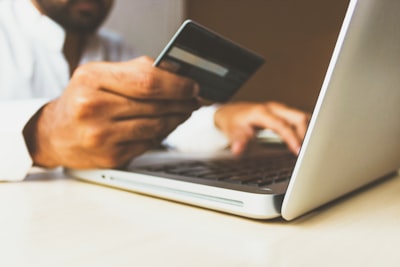
Email subscribers convert at 6–12x the rate of cold paid traffic and cost nothing to reach once they're on your list. A basic abandoned cart flow and post-purchase follow-up sequence are the two highest-ROI email automations for any ecommerce store — both can be set up in an afternoon and run indefinitely.

📣 Paid Advertising
Meta (Facebook and Instagram) ads remain the most scalable paid channel for ecommerce in 2026. Audience targeting by interest, behaviour, and lookalike audiences allows you to reach precisely the right buyer at scale. Start at $15–25/day and cut anything not generating a positive return within five days.
🎓 Free Resource
Start Your Ecommerce Business — Free Course
Ecommerce Infinity Academy covers every model, every platform, and every stage of the process — from choosing your niche to scaling past $10K/month. No paid upsells, no withheld content. Just a structured learning path that actually produces results.
🔍Niche & Product Research
🛒Platform Setup — Shopify, Etsy, Amazon
📦Supplier Sourcing & Vetting
🎵TikTok & Social Media Strategy
💰Paid Ads — Facebook, Google, TikTok
📈Scaling to $10K/Month
Access Free Course → Academy
Key Things to Know Before You Start
✅ What Successful Ecommerce Sellers Do Differently
- They pick one model and one niche and go deep before adding anything else — breadth kills beginners, depth builds businesses
- They test products organically before spending on paid ads — TikTok and organic Etsy traffic will tell you if something converts before you invest in advertising
- They treat reviews as their most important business asset — every positive review improves conversion rate, reduces ad cost, and builds trust for new buyers
- They reinvest profits back into the business — the stores that reach $10K/month fastest are the ones that scale their marketing spend systematically from early revenue
- They build an email list from day one — the most valuable ecommerce asset is your own customer list, which no platform can take away from you
- They model what's already selling, then differentiate — you don't need to invent a new product category, just serve an existing demand better than the current options
❌ Mistakes That Kill New Ecommerce Stores
- Choosing a supplier based only on price without testing quality — bad fulfilment destroys reviews and seller ratings that can take months to rebuild
- Running paid ads before validating organically — spending $500 on ads before you know the product converts is the fastest way to lose money
- Building a general store instead of a niche store — "I sell everything" stores almost always lose to focused stores serving a specific buyer
- Ignoring customer service — one unresolved dispute or chargeback can restrict your seller account or trigger a permanent ban on some platforms
- Expecting results within 30 days — most ecommerce businesses take 3–6 months to generate meaningful consistent revenue; quitting before month 4 is the most common failure
- Copying competitors' products without understanding their audience — selling the same product at the same price with no differentiation is a race to the bottom you will lose
Ready to Start Your Ecommerce Business?
Whether you want to learn the system yourself or have a team build and manage your entire store — Ecommerce Infinity has the services, the resources, and the expertise to get you there.
Get Started Today →
What Our Clients Are Saying
Real feedback from ecommerce sellers who built their businesses with Ecommerce Infinity
★★★★★
I had no idea where to start. The Ecommerce Infinity guides explained everything in plain English — what ecommerce actually is, which model made sense for someone with my budget, and exactly how to set it up. Three months later my Etsy store is generating £2,100 a month consistently.
★★★★★
I spent two months reading free content online and felt more confused than when I started. The Ecommerce Infinity Academy put everything in the right order — business model selection, then niche, then store setup, then traffic. That sequence made all the difference. I'm at $3,800 a month after seven months.
★★★★★
The done-for-you service was worth every penny. My Amazon store was live in three weeks and generating $4,200 a month by month four. I couldn't have navigated supplier sourcing, listing optimisation, and PPC on my own. Ecommerce Infinity handled every element professionally.
★★★★★
Started with no ecommerce knowledge at all. The beginner guides on Ecommerce Infinity answered every basic question I was embarrassed to ask. Six months in, my Shopify dropshipping store consistently clears $5,500 monthly. The platform comparison guide alone saved me from setting up on the wrong platform.
★★★★★
The income projection tables in the Ecommerce Infinity guides are honest in a way most YouTube content isn't. I knew exactly what to expect at each stage, which stopped me quitting when month two was slow. Month five I crossed £4,000 for the first time. The realistic framing made all the difference to my patience.
★★★★★
I signed up for the done-for-you Etsy POD service and had 50 live listings within the first week. The niche research they did for me was genuinely impressive — products I would never have found myself, targeting communities I didn't know existed on Etsy. Made my first sale within 48 hours of launch.
 English
 Deutsch
 Français
 Italiano
 Español
 Português
 العربية
 Magyar
 Polski
 اردو
اردو 中文
中文 日本語
日本語